
If your child struggles with constipation, tummy aches, reflux, food sensitivities, or unpredictable digestion, you’ve probably already heard plenty of advice.
Try probiotics.
Cut dairy.
Remove gluten.
Add digestive enzymes.
Increase fiber.
While those recommendations can absolutely be helpful, many parents tell us the same thing:
“We’ve tried all of it…and something still feels like we’re missing the bigger picture.”
Often, they are.
Because your child’s gut doesn’t work independently. It takes its instructions from the brain.
The Brain Is the Boss
Your digestive system isn’t just a tube that processes food.
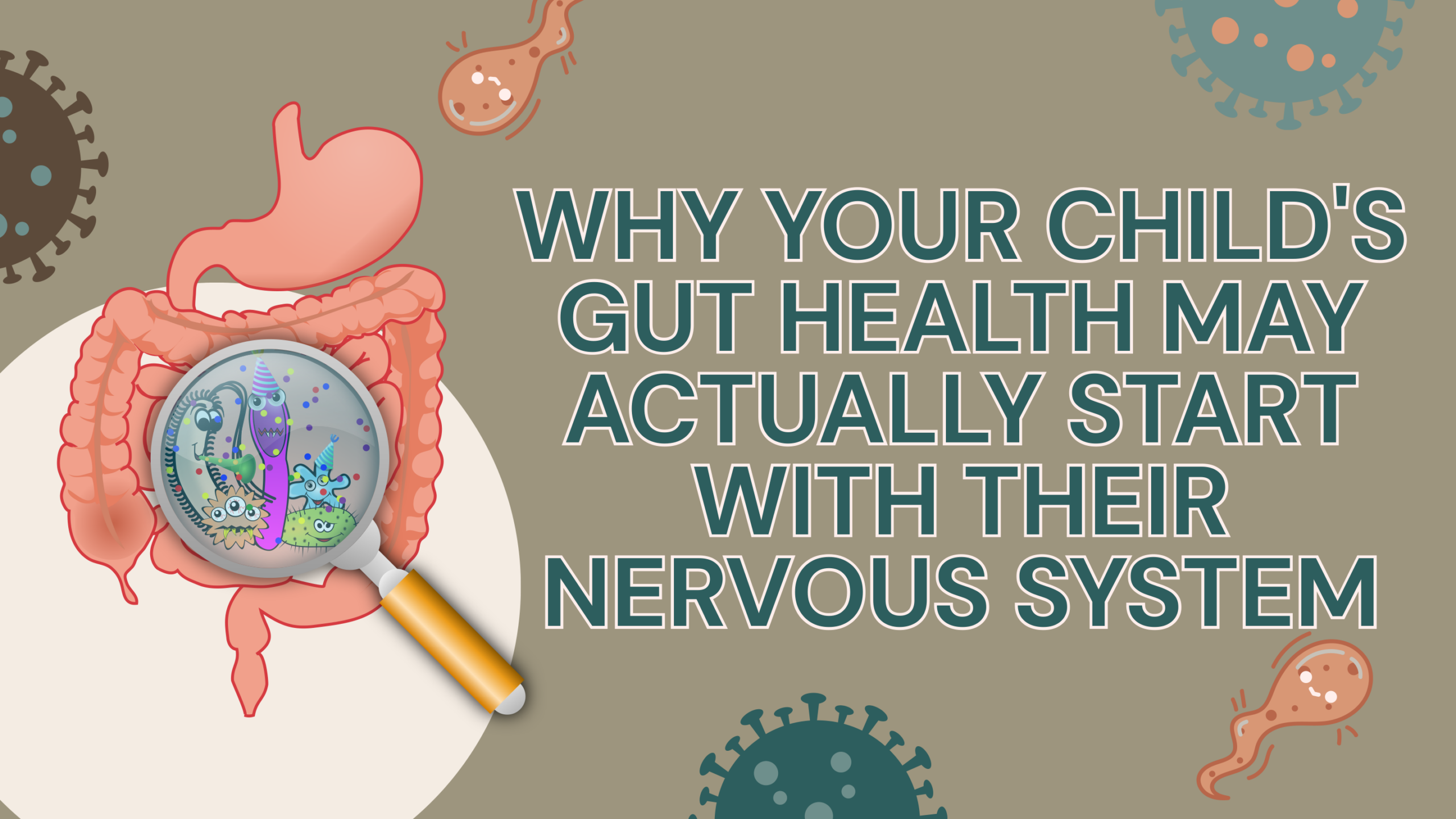
It’s constantly communicating with the brain through an incredible communication network called the gut-brain axis.
Most people hear that phrase and immediately think:
“So the gut affects the brain.”
And it does.
But what many people don’t realize is that the communication starts with the brain.
Your child’s brain tells the digestive system when to:
- Move food through the intestines
- Produce stomach acid
- Release digestive enzymes
- Absorb nutrients
- Regulate inflammation
- Support a healthy immune system
When those messages are clear, digestion tends to work the way it was designed to.
When those messages become disrupted, the gut often begins to struggle, even if your child is eating healthy foods.
Meet the Vagus Nerve: The “Rest and Digest” Superhighway
One of the biggest players in this conversation is the vagus nerve.
Think of it as the main communication highway between the brain and many of the body’s most important organs, including the stomach and intestines.
The vagus nerve helps regulate:
- Digestion
- Gut motility
- Stomach emptying
- Inflammation
- Immune function
- Feelings of calm and regulation
When your child is relaxed and regulated, the vagus nerve is doing its job.
When they’re stuck in “fight or flight,” digestion is often one of the first systems to slow down.
Why Stress Shows Up as Digestive Problems
Stress isn’t just emotional.
For kids, stress can come from many different places, including:
- A difficult pregnancy
- Birth interventions or birth trauma
- Frequent illness
- Antibiotic use
- Physical injuries or falls
- Emotional stress
- Sensory overload
- Busy schedules with very little downtime
When the nervous system spends too much time in survival mode, the body naturally prioritizes keeping us safe over digesting lunch.
That’s why children who seem anxious, overwhelmed, or chronically dysregulated often experience symptoms like:
- Constipation
- Reflux
- Gas and bloating
- Frequent stomach aches
- Picky eating
- Food sensitivities
- Irregular bowel movements
These symptoms don’t necessarily mean there’s something wrong with the gut itself. They may be signs that the communication between the brain and gut isn’t working as efficiently as it should.
Why Diet Alone Doesn’t Always Solve the Problem
We love helping families build healthy habits.
Nutrition matters.
Hydration matters.
Sleep matters.
Movement matters.
But if the nervous system is constantly stuck in stress mode, even the healthiest foods may not be digested, absorbed, or utilized as effectively.
That’s why some families feel frustrated after trying elimination diets, supplements, or probiotics without seeing lasting improvements.
Those tools can absolutely be part of the solution, but they work best when the nervous system is able to receive and respond to them.
How Neurologically Focused Chiropractic Fits In
At Wild Roots Chiropractic, our goal isn’t simply to chase digestive symptoms.
Instead, we ask a different question:
“Why isn’t the nervous system communicating with the gut the way it should?”
Using our INSiGHT™ Scans, we evaluate how your child’s nervous system is functioning and look for areas of stress or dysregulation that may be affecting communication between the brain and body.
Gentle, neurologically focused chiropractic adjustments are designed to help restore healthier communication throughout the nervous system so the body can better regulate itself, including digestion.
The Bigger Picture
Every child is different.
Sometimes gut challenges are primarily nutritional.
Sometimes they’re related to allergies or medical conditions that require evaluation by a pediatrician or pediatric gastroenterologist.
But in many children, the nervous system is a missing piece that often goes overlooked.
When the brain and body communicate more effectively, we frequently see improvements that extend far beyond digestion, including sleep, emotional regulation, focus, resilience, and overall well-being.
Because the goal isn’t simply healthier digestion.
It’s helping your child function the way they were designed to.
Is Your Child’s Nervous System Affecting Their Gut?
If your child struggles with ongoing digestive issues and you’ve already tried changing foods or adding supplements without lasting success, it may be time to look upstream.
At Wild Roots Chiropractic, we specialize in neurologically focused chiropractic care for infants, children, and growing families. Our gentle INSiGHT™ Scans help us understand how your child’s nervous system is functioning so we can create a care plan that’s personalized to their needs.
Ready to learn more? We’d love to help your family take the next step.